
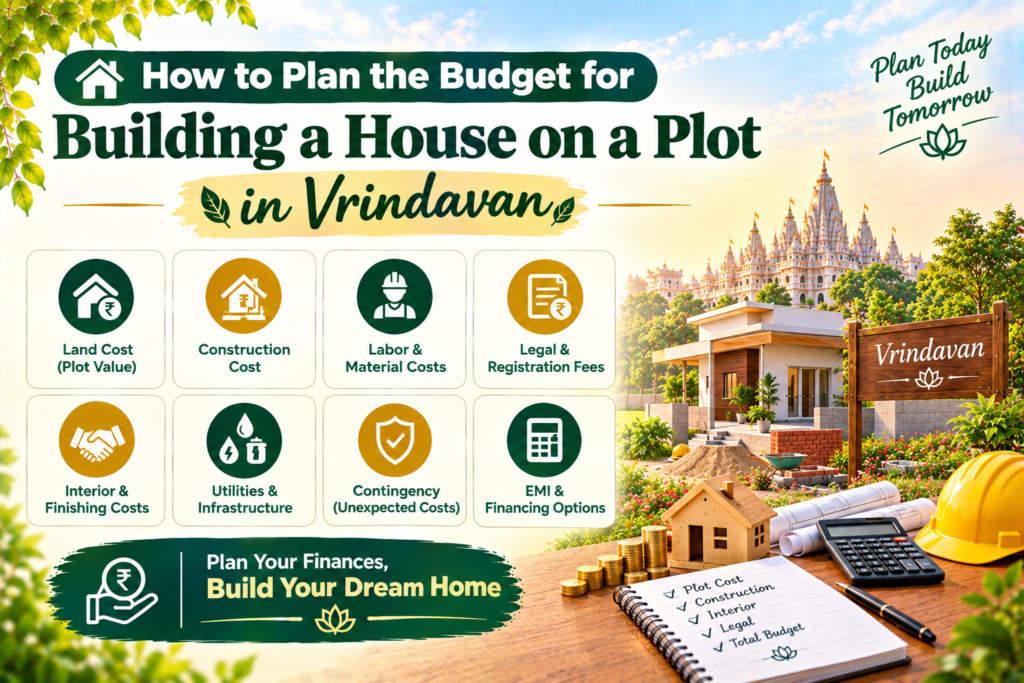
How to Plan the Budget for Building a House on a Plot in Vrindavan
Buying a plot is only the first step toward building your own home. Once you purchase land, you also need to plan for construction, approvals, professional fees, utilities, interiors, and other expenses.
For anyone considering house construction on a plot in Vrindavan, having a clear budget before starting construction can make the entire process easier to manage.
The final cost can vary depending on plot size, built-up area, design, construction specifications, materials, labor, and finishing requirements. Therefore, buyers should plan the complete project rather than considering only the cost of construction.
1. Start With Your Plot and Construction Requirements
Before estimating construction costs, understand what you want to build.
Consider:
- Plot size
- Number of floors
- Number of bedrooms
- Built-up area
- Parking requirement
- Open space
- Balcony or terrace
- Kitchen size
- Number of bathrooms
- Storage requirements
You do not necessarily need to construct the entire plot area. The final layout should be planned according to applicable building regulations and your requirements.
2. Decide Your Approximate Built-Up Area
Construction expenses are generally influenced by the area being constructed.
For example, two buyers may own plots of the same size but have different construction budgets because one plans a compact home while the other wants a larger multi-floor house.
Before approaching a contractor, decide approximately:
- Ground-floor area
- Upper-floor area, if applicable
- Covered parking
- Open areas
- Terrace
- Additional structures
A clear construction plan makes budget estimation more practical.
3. Hire an Architect for Proper Planning
A professional architect can help convert your requirements into a practical house plan.
An architect may help with:
- Floor planning
- Room placement
- Building layout
- Natural light and ventilation
- Staircase planning
- Parking
- Structural coordination
- Applicable building requirements
Good planning before construction can also reduce unnecessary changes during the project.
4. Understand the Major Construction Cost Components
The construction budget should include more than bricks, cement, and labor.
Major cost components can include:
- Civil construction
- Steel
- Cement
- Bricks or blocks
- Electrical work
- Plumbing
- Flooring
- Doors and windows
- Paint
- Sanitary fittings
- Kitchen work
- Waterproofing
- Roofing
- Labor
The exact cost will depend on the specifications and materials selected.
5. Decide Your Construction Specification
The same plot can produce very different construction costs depending on the quality and specifications selected.
For example, you may choose different levels of:
- Flooring
- Bathroom fittings
- Doors
- Windows
- Electrical fittings
- Kitchen finishes
- Paint
- Lighting
- Fixtures
Instead of selecting materials randomly during construction, decide your preferred specifications in advance and include them in the budget.
6. Keep a Separate Budget for Professional Fees
Professional services should be included in your overall budget.
Depending on the project, you may need services from:
- Architect
- Structural engineer
- Surveyor
- Contractor
- Legal professional
- Other specialists
The exact professionals required will depend on the project and applicable requirements.
7. Account for Utility Connections
A new house may require several utility-related expenses.
These can include:
- Electricity connection
- Water connection
- Plumbing
- Drainage arrangements
- Sewerage or applicable waste-management arrangements
- Internet and communication setup
Before construction begins, understand which utilities are already available at the plot and which connections will need to be arranged.
8. Don’t Forget Site Development Costs
The plot itself may require preparation before or during construction.
Depending on the site, expenses may include:
- Site leveling
- Boundary wall
- Gate
- Drainage work
- Soil-related work
- Temporary construction arrangements
- Approach or entrance work
These expenses can vary significantly depending on the existing condition of the plot.
9. Plan for Parking and External Areas
Parking should be included in the house plan from the beginning.
Consider whether you need space for:
- Car
- Two-wheelers
- Visitors
- Future vehicle requirements
You may also need to budget for:
- Driveway
- Gate
- Boundary wall
- Landscaping
- Outdoor lighting
Planning these elements later can result in layout changes and additional expenses.
10. Keep a Contingency Budget
Construction projects can experience unexpected expenses.
For example:
- Material prices may change
- Additional work may become necessary
- Site conditions may require modifications
- Design changes may occur
- Construction timelines may extend
Keeping a contingency amount can help you handle unexpected costs without disrupting the project.
11. Compare Contractor Estimates Carefully
Do not select a contractor only because the quoted amount is the lowest.
When comparing estimates, check whether each quotation includes:
- Material
- Labor
- Electrical work
- Plumbing
- Flooring
- Painting
- Doors and windows
- Fixtures
- Waterproofing
- Other finishing work
Two quotations can look very different simply because they include different specifications.
12. Create a Stage-Wise Construction Budget
Instead of treating construction as one large expense, divide the budget into stages.
A basic structure could include:
| Construction Stage | Budget Allocation |
|---|---|
| Site Preparation | |
| Foundation | |
| Structure | |
| Brick/Block Work | |
| Electrical & Plumbing | |
| Flooring | |
| Doors & Windows | |
| Painting | |
| Kitchen & Bathrooms | |
| External Development | |
| Contingency |
The actual allocation will depend on your project, specifications, and contractor arrangement.
13. Consider Future Requirements
If you are building a home on a plot in Vrindavan for long-term use, think about how your requirements may change.
You may want to plan for:
- Future floor expansion
- Additional bedroom
- Senior-friendly access
- Larger parking requirements
- Rental portion
- Guest accommodation
- Solar installation
- Additional storage
Planning for future possibilities during the design stage can sometimes be more practical than making major structural changes later.
14. Don’t Spend the Entire Budget on Interiors
Many buyers focus heavily on interiors after construction.
However, the budget should first cover the fundamental aspects of the house:
- Structure
- Waterproofing
- Electrical work
- Plumbing
- Doors and windows
- Flooring
- Essential fixtures
Once these are properly planned, the remaining budget can be allocated toward decorative interiors and upgrades.
15. Visit the Plot Before Finalizing the House Plan
The actual plot should be inspected before finalizing construction plans.
Check:
- Plot dimensions
- Road access
- Surrounding buildings
- Plot level
- Sunlight
- Ventilation possibilities
- Utility access
- Drainage
- Neighboring plots
The site conditions can influence the final house design.
16. Keep Legal and Approval Requirements in Mind
Before starting construction, understand the applicable requirements for your property.
Depending on the location and project, this may include:
- Building plan approval
- Land-use requirements
- Setback requirements
- Local development rules
- Utility permissions
- Other applicable approvals
Do not begin construction based only on an informal assumption about what can be built on the plot.
Consult the appropriate local authority or qualified professional where necessary.
Example of a Simple House Construction Budget
Suppose you have already purchased a plot and are planning to construct a residential property.
Your overall project budget could be divided into:
- Architectural and planning expenses
- Site preparation
- Structural construction
- Electrical and plumbing
- Flooring and finishing
- Doors and windows
- Kitchen and bathrooms
- Boundary wall and gate
- Utility connections
- External development
- Contingency
The actual amount for each category will depend on the size, specifications, location, and construction choices.
Common Budgeting Mistakes to Avoid
1. Calculating Only the Civil Construction Cost
A house requires electrical, plumbing, flooring, doors, windows, fixtures, and other work in addition to the main structure.
2. Changing the Design During Construction
Frequent design changes can increase costs and delay the project.
3. Choosing Materials Without a Budget
Premium materials can significantly increase the final project cost.
4. Ignoring External Work
Boundary walls, gates, parking, drainage, and landscaping should be considered separately.
5. Not Keeping a Contingency Amount
Unexpected expenses are possible during construction, so some budget flexibility is useful.
Why Budget Planning Matters Before Building a House
Proper planning helps you understand how much of your available budget can realistically be allocated to:
- Construction
- Finishing
- Utilities
- External development
- Future improvements
It also helps you decide whether you should build immediately or phase the construction according to your financial capacity.
Final Thoughts
House construction on a plot in Vrindavan requires more than purchasing land and hiring a contractor. A successful project starts with a clear plan covering the built-up area, design, construction specifications, utilities, professional services, external development, and contingency expenses.
If you are planning to buy a plot in Vrindavan for future construction, consider your construction budget before finalizing the plot. The size, location, access, utilities, and development conditions of the plot can all influence your future building plans.
At Brajbhoomi Realty, buyers can explore plot options in Vrindavan based on their preferred location, plot size, budget, and future construction requirements.