
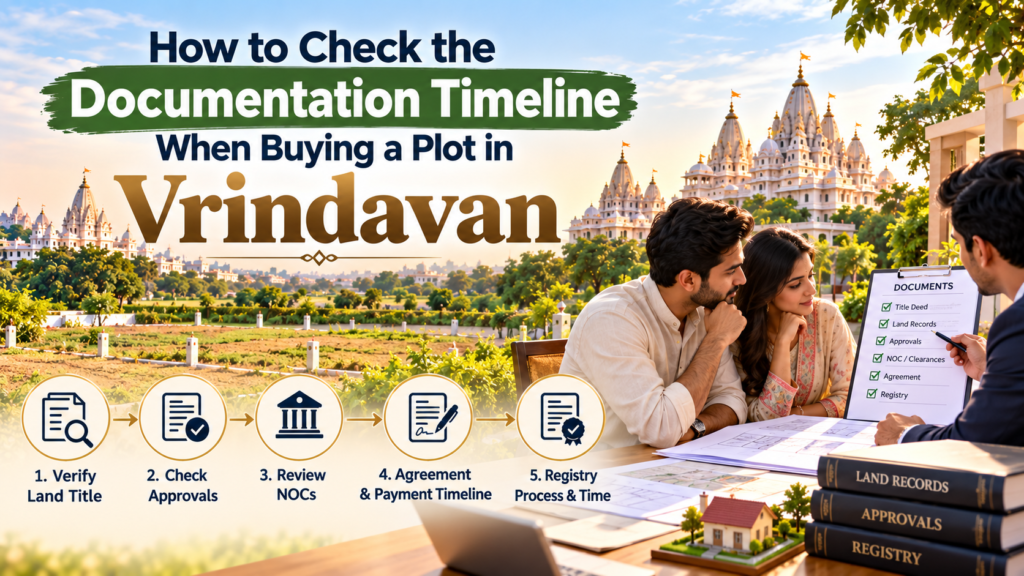
How to Check the Documentation Process When Buying a Plot in Vrindavan
Buying a plot involves more than selecting a location, comparing prices and visiting the site. Proper documentation is an important part of the purchasing process because it helps buyers understand the property’s ownership, status, permitted use and transaction history.
If you are planning to buy a plot in Vrindavan, understanding the documentation process step by step can make the purchase more organized and help you identify questions that should be clarified before making a financial commitment.
This guide explains the typical documentation stages buyers should understand when purchasing a plot in Vrindavan.
Conclusion
1. Start With the Basic Property Details
Before reviewing detailed documents, collect the basic information about the plot.
Ask for details such as:
- Plot number
- Plot size
- Dimensions
- Location
- Address
- Seller or developer details
- Project details, where applicable
- Current ownership information
These details should be consistent across the documents you receive.
2. Verify the Ownership Details
One of the first important checks is understanding who legally owns the property.
The relevant ownership records should be reviewed carefully to determine:
- Name of the owner
- Property identification
- Ownership history where relevant
- Transfer details
- Whether the person selling the property has the authority to do so
Ownership verification is an important stage and should not be based only on verbal information.
For complex cases, buyers should seek advice from a qualified property lawyer.
3. Check the Property Identification
Make sure the plot can be clearly identified in the relevant records.
Compare details such as:
- Plot number
- Area
- Dimensions
- Location
- Boundaries
- Survey or other applicable identification details
The physical plot should correspond with the property information provided in the documents.
4. Check Land-Use and Applicable Property Details
Before purchasing, understand how the land is classified and whether the intended use is permitted.
Depending on the property and location, buyers may need to verify relevant:
- Land-use information
- Development permissions
- Layout approvals
- Project approvals
- Local authority requirements
Do not assume that every piece of land can automatically be used for the same purpose.
5. Verify Relevant Approvals
If the plot is part of a plotted development or project, ask about the approvals and permissions applicable to that development.
Depending on the project, relevant documentation may include:
- Layout approval
- Development-related permissions
- Local authority approvals
- Other applicable project documents
The exact requirements can vary according to the location and nature of the property.
6. Check for Outstanding Dues
Before completing the transaction, ask whether there are any outstanding property-related dues or obligations.
Depending on the property, these may include:
- Taxes
- Development charges
- Maintenance charges
- Utility-related dues
- Other applicable payments
Ask for relevant receipts or records where appropriate.
7. Review the Sale Agreement
Once the buyer and seller agree on the transaction, the terms should be properly documented.
A sale agreement may cover matters such as:
- Agreed sale price
- Payment schedule
- Property description
- Possession terms
- Transaction conditions
- Responsibilities of the parties
- Timeline for completion
The exact contents depend on the transaction.
Before signing, buyers should carefully read the document and seek legal advice if required.
8. Verify the Payment Terms
Documentation should clearly reflect the agreed payment arrangement.
Before making payments, clarify:
- Total consideration
- Booking amount, if applicable
- Advance payment
- Remaining payment
- Payment milestones
- Applicable transaction expenses
Maintain proper records of payments and receipts throughout the transaction.
9. Understand the Registration Stage
Property registration is a key stage in a purchase transaction.
The registration process involves recording the transfer through the applicable government registration system and completing the required formalities.
Buyers should confirm:
- Required documents
- Applicable fees and charges
- Appointment or scheduling requirements
- Identity documents
- Payment requirements
- Presence of relevant parties
The exact procedure and applicable charges can vary depending on the transaction and prevailing rules.
10. Check the Final Sale Deed
The final sale deed or applicable transfer document should accurately describe the property and transaction.
Check details such as:
- Buyer name
- Seller name
- Property description
- Plot number
- Area
- Consideration
- Other agreed terms
Any significant discrepancy should be clarified before the document is finalized.
11. Keep Copies of All Documents
After completing the purchase, organize and securely store all important documents.
These may include:
- Sale deed
- Registration documents
- Payment receipts
- Property records
- Approval documents
- Tax receipts
- Possession-related documents
- Other transaction records
Digital backups can also be maintained for convenient future reference.
12. Check Physical Details Against the Documents
Documentation verification should be combined with a physical site inspection.
Compare:
- Plot size
- Plot dimensions
- Boundaries
- Plot number
- Road-facing side
- Access
- Surrounding property
If the physical site and documentation do not appear to match, pause the transaction and obtain clarification before proceeding.
13. Understand the Possession Process
If the plot is being transferred with a specific possession arrangement, understand when and how possession will be handed over.
Clarify:
- Possession date
- Site condition
- Boundary status
- Pending work
- Access
- Applicable responsibilities
Keep relevant possession documentation for your records.
14. Check Documentation for Plotted Developments
If you are purchasing a plot within a larger development, there may be additional project-level information to review.
Depending on the project, buyers may want to understand:
- Layout plan
- Internal roads
- Common facilities
- Development status
- Applicable approvals
- Maintenance arrangements
- Project-related documentation
This can provide a clearer picture of the development in which the plot is located.
15. Ask About Any Existing Disputes or Restrictions
Before purchasing, ask whether there are any known issues affecting the property.
These may relate to:
- Ownership
- Boundaries
- Access
- Court matters
- Liens or encumbrances
- Restrictions on transfer
- Other legal claims
A professional legal review can help buyers identify issues that may not be obvious from a basic document check.
16. Do Not Rely Only on Photocopies or Verbal Assurances
Documents provided by a seller or intermediary should be reviewed carefully.
Where appropriate, verify relevant records through official or authoritative sources.
Also remember that a document appearing genuine does not automatically mean that every aspect of the transaction is legally clear. Professional verification may be appropriate for significant purchases.
17. Understand the Role of Professional Verification
Property documentation can involve technical and legal terminology.
A qualified property lawyer can help review:
- Ownership records
- Agreements
- Sale deed
- Encumbrance-related matters
- Applicable approvals
- Transaction conditions
A civil or property professional may also help with physical site and layout-related verification where required.
18. Follow a Simple Documentation Timeline
A buyer can broadly organize the process like this:
Step 1: Collect basic property details
↓
Step 2: Verify ownership
↓
Step 3: Check property identification and boundaries
↓
Step 4: Review land-use and applicable approvals
↓
Step 5: Check dues and other obligations
↓
Step 6: Review sale agreement
↓
Step 7: Complete agreed payments
↓
Step 8: Execute and register the applicable transfer document
↓
Step 9: Collect final records
↓
Step 10: Securely store all documents
The exact sequence can vary depending on the property and transaction structure.
19. Make a Pre-Purchase Documentation Checklist
Before finalizing a residential plot in Vrindavan, keep a checklist covering:
Property identification
Ownership verification
Plot size and dimensions
Physical boundaries
Land-use details
Applicable approvals
Outstanding dues
Sale agreement
Payment records
Registration requirements
Final transfer document
Possession details
Copies of completed documents
A checklist can make it easier to track what has already been verified and what still needs attention.
20. Take Your Time Before Signing
Property purchases involve significant financial commitments, so buyers should avoid rushing through documentation.
Before signing or making a major payment:
- Read the documents carefully
- Clarify unclear terms
- Compare property details
- Verify important records
- Ask for missing documents
- Seek professional advice where necessary
Taking additional time at the documentation stage can help reduce misunderstandings later.
Understanding the plot documentation process in Vrindavan can help buyers approach a property purchase in a more structured way.
Start by collecting basic property details, then verify ownership, property identification, land-use information, applicable approvals, dues and transaction documents. The physical plot should also be checked against the documentation before the purchase is completed.
Because property transactions can involve legal and technical issues, buyers should consider professional verification for important documents and significant transactions.
If you are planning to buy a plot in Vrindavan, a clear documentation process combined with physical site inspection and proper due diligence can help you make a more informed property purchase.